
Are Marketing Mix Model Guidelines Applicable to my Team?
Marketing Mix Models are powerful tools that provide valuable insights into the effectiveness of marketing activities. While high-level MMMs offer a broad overview, adapting these studies to address specific segments, markets, or tactics can yield more actionable insights. By conducting segmented analysis, collecting granular data, and performing deep dives, brands can optimize their marketing efforts to meet the diverse demands of their consumers. It’s a tool that will help marketers and C-Level executives to understand the DNA of their marketing efforts and be more effective in how they develop future strategies, while looking to improve their team development and knowledge.
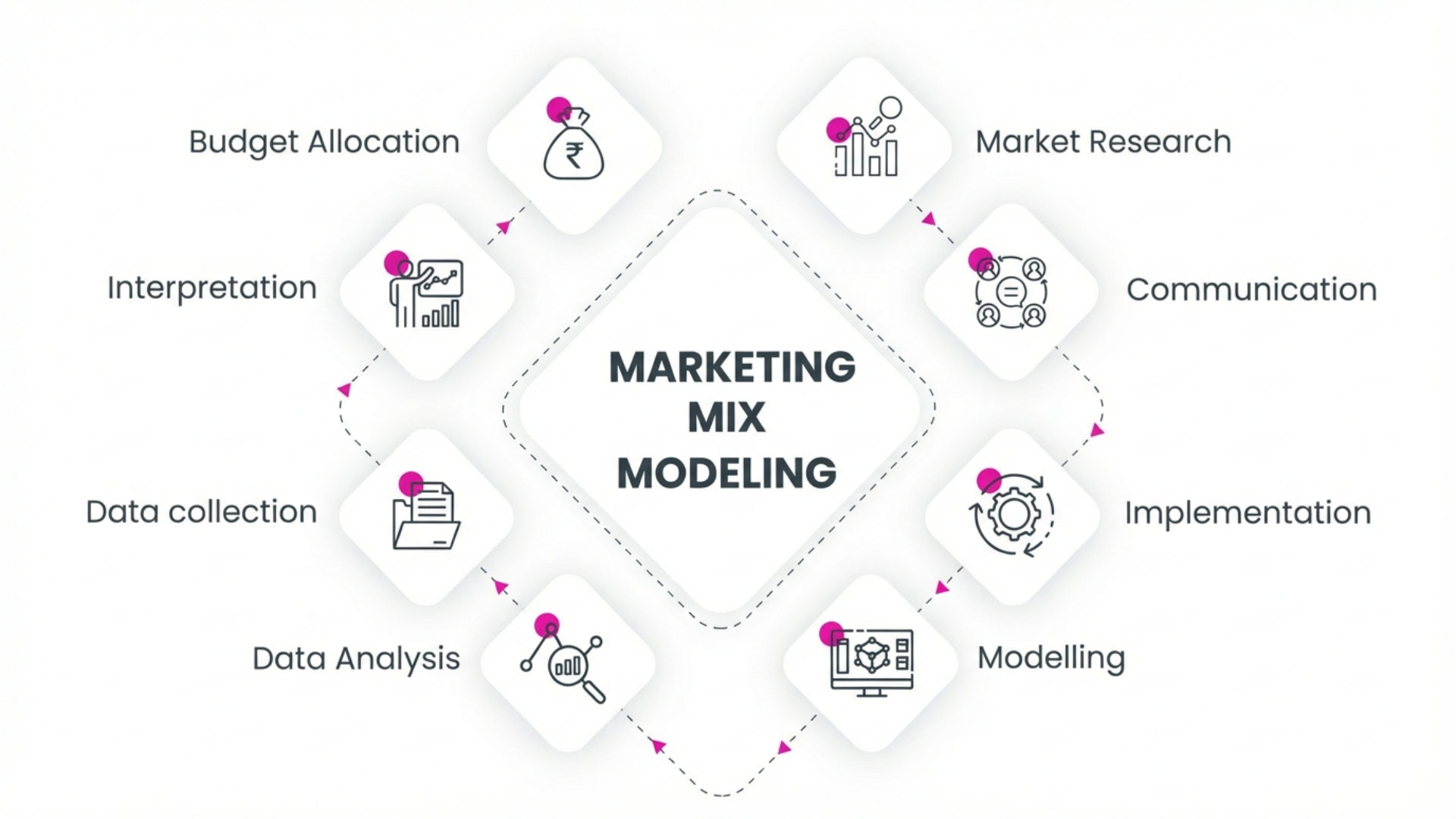
The industry is growing rapidly in new ways of understanding the data around their own marketing efforts, and this brings an opportunity to enhance team capabilities in omnichannel marketing strategies using AI to improve attribution.
This is the second article in the Marketing Mix Model series that started with a review of what MMMs are and how AI algorithms can solve some of their limitations. In this article, we discuss how to apply general guidelines to specific teams and markets.
Introduction to Marketing Mix Models (MMMs)
Marketing Mix Models (MMMs) are analytical tools that help businesses understand the impact of their marketing activities on sales performance. By decomposing total sales into contributions from various marketing efforts—such as advertising and promotions—along with non-marketing activities that affect sales—like seasonality or specific dates—MMMs provide a comprehensive view of marketing effectiveness. These models enable companies to make data-driven decisions, optimize their marketing strategies, and maximize return on investment (ROI).
The Pioneers: How Big CPG Companies Run Their MMMs
Large Consumer Packaged Goods (CPG) companies were among the first to adopt MMM methodologies, relying on statistical techniques to analyze the impact of their marketing efforts. Leading CPG brands like Procter & Gamble, Unilever, and Mondelez have been at the forefront of this evolution, leveraging advanced MMMs to fine-tune their marketing strategies. These companies typically run MMMs at a brand level, analyzing the overall impact of marketing activities across all markets and segments covered by the brand. This approach provides a high-level view of marketing effectiveness and helps identify which strategies drive the most significant ROI. However, as markets become more segmented and media platforms more complicated, the question arises: Are MMM results applicable to my team?
Are MMM results applicable to my team?
Specific market segments
While brand-level MMMs offer valuable insights, they may not always provide the granularity needed to address specific market segments or consumer demands. The aggregated nature of brand-level data can obscure variations in performance across different regions, demographics, or product lines. For instance, a marketing strategy that works well for a brand on a national level might not be as effective in a particular region with unique consumer preferences.
Tactical teams
Sometimes these studies don’t provide guidance for specific teams within the company. For example, the claim ‘Google Ads drives more sales than TV’ can’t really help the Online Paid Media team from the brand understand how to optimize Google Ads campaigns.
Adapting MMM Studies to Answer More Granular Questions
Recognizing the need for more granular analysis is the first step toward making more informed marketing decisions. To address the need for more detailed insights, companies can adapt their MMM studies to answer granular questions specific to segments or markets. Here are some strategies to achieve this:
- Segmented Analysis: Break down the MMM analysis by key segments such as geographic regions, customer demographics, or product categories. This approach allows companies to understand how marketing activities impact different segments and tailor strategies accordingly.
- Granular Data Collection: Collect and integrate data at a more granular level. This might involve gathering detailed sales and marketing data from specific regions, stores, or online platforms. The more detailed the data, the more precise the analysis because it’s possible to control for more factors that may impact sales in different markets.
- Media Tactic Deep Dive: Use a Marketing Mix Model to understand which media tactics are the most important and then run a separate study to interpret which metrics should be optimized for maximizing sales or any other KPI. It’s worth noting that starting with high-level studies is not mandatory; brands or teams can find value in running platform- or market-specific models directly. Sometimes this approach is preferred because it may be easier to get proper data at a different level of aggregation.
- Continuous Monitoring and Adjustment: Implement a continuous monitoring system to track the performance of marketing activities at a granular level. Regularly update the MMM with new data to refine the analysis and make timely adjustments to marketing strategies.
By adopting these strategies, companies can ensure that their marketing efforts are more precisely targeted, leading to better performance and higher ROI in specific segments or markets while providing tactical guidance to their teams.