Paid Media & MarTech through the lens of Zenda
Clear analysis on what shifts in the growth ecosystem: platforms, data, martech and judgment.

What PostHog can record in a mobile fintech app without exposing sensitive data
In a mobile fintech app, the question isn't what you can measure, but what you can record without capturing an ID document or a balance, and which features have real parity on mobile. What comes masked by default, what changes between a native app and React Native or Flutter, and where mobile lags behind web.

Amazon Ads Adds Its DSP as a Way to Buy ChatGPT Ads, With Not a Word on Measurement
Amazon Ads announced a partnership with OpenAI to sell ads inside ChatGPT, with Delta Vacations among the first brands testing the pilot. Digiday clarifies the buying flows through the Amazon DSP, but neither Amazon nor the trade press covering the announcement says a word about how that spend will be measured.

ChatGPT Ads opens self-serve in 52 countries, and only two are in Latin America
OpenAI opened ChatGPT Ads self-serve access in 52 countries on August 31, but only Brazil and Mexico are on the official list from Latin America. For the rest of the region, getting into the channel is no longer a budget decision; it depends on where the company holds a legal entity.

Which PostHog features are worth checking first in an ecommerce store
An ecommerce store loses money at several points along the path to purchase, and PostHog is a set of products that answer different questions, not a single tool. A map of what to look at based on the business question, with the limits of each one clearly stated.

Google is migrating Search campaigns to AI Max all through September, and the ones that came from ACA get copy rewriting left on
On September 1, 2026, Google started automatically migrating Search campaigns running Campaign-level Broad Match or Automatically Created Assets into AI Max, with no warning and no button to click. Accounts that came from ACA get automatic copy rewriting turned on by default.

OpenAI launches a ChatGPT Ads Manager plugin that runs campaigns by conversation, with write permissions
OpenAI launched the ChatGPT Ads Manager plugin, which creates, manages, and analyzes ad campaigns from a conversation, with read and write permissions over the account. The help center does not document it yet, so the note separates what is confirmed from what remains an open question.

On August 24 YouTube starts counting a view from the first frame, and the view numbers in your reports jump that day with no marker
Starting August 24, 2026, YouTube counts a public view from the first frame, with no minimum watch time, across long-form video, Shorts, livestreams and podcasts. The old metric survives under another name and monetization does not change, but the number your clients read jumps that day with no marker in the report.

ChatGPT Ads adds 31 European countries and nears forty markets, ten weeks after running in five
OpenAI rolls ChatGPT Ads out to 31 European countries the week of Aug 24 and says ad revenue grew over 25% in August: what it means for LatAm budgets.

Google Ads is removing language targeting from Search, and in a region that runs three languages that is not a minor detail
Google confirmed that starting in late September 2026 it removes the campaign-level language targeting control from Search and from the Search Network portion of Performance Max. For accounts running Spanish, Portuguese and English in the same region, the change puts reporting, campaign names and how market splits used to run on language all in play.

Google rewrites Merchant Center performance reports on August 24, and restates July's numbers behind them
On August 11 Google announced that Merchant Center performance reports change on the 24th. Two of the four changes apply retroactively back to July 1, so a July number already reported will stop matching the platform. The only defence is exporting the history before that date.

Manus is splitting from Meta, and it deletes what you generated with the Ads Manager connector
Manus, the agent Meta installed inside Ads Manager’s tools menu in February, announced on August 11 that it is going independent again and will delete data generated since December 29, 2025 from affected accounts. The backup window closes August 23 at 07:59 Singapore time.

Cloudflare launched its AI visibility dashboard, and its four metrics do not come from the network layer that makes it different
Cloudflare added the AEO Visibility Dashboard to its AEO Suite on August 6, in early access with no public pricing. Its four metrics are built from the same prompt sampling the release itself describes as limited, while the genuine network-layer data lives in a separate panel, AI Operator Activity.

Nielsen is buying DoubleVerify for $2.15 billion, and ad verification lands in the hands of a company that competes in the business it audits
On August 6, Nielsen announced it will buy DoubleVerify for $2.15 billion, eight months after Integral Ad Science was taken private by a private equity fund. In the same window, the owner of IBOPE, Latin America’s TV ratings currency, also changed hands. What that changes for anyone buying media behind a verification gate, and which questions are now worth asking.

Amazon Sponsored Products Now Runs Inside Creator Content, and Part of the Keyword Report Becomes Inferred
Starting August 10, Amazon Sponsored Products campaigns begin showing inside creator content with automatic enrollment, and part of the search term report becomes inferred instead of observed.

ChatGPT Ads Finally Arrives in Brazil and Mexico, With the First Ads Already Running
After months as "the next markets," OpenAI has put a date on ChatGPT Ads in Brazil and Mexico: the first ads are already running in Brazil, and the commercial launch arrives this week.

The IAB's new AI visibility framework sets a measurement standard no one yet audits
The IAB's new framework is the first attempt to standardize how AI visibility gets measured, with a nine-criteria bar for decision-grade data. It doesn't certify anyone yet, so the burden of proof for vendor claims falls on the buyer.

Google started writing the description on your Shopping ads
On July 30, AI-generated descriptions began appearing next to Shopping and Product ads, extending a test already running on Search. There is no documented opt-out and no clean way to isolate the CTR effect. What stays under your control is the feed, and that changes how it should be reviewed.

How PostHog turns every release into a measurable question, and why almost no one in growth does the same
Feature flags and experiments aren't a technical detail of PostHog: they're the mechanism that answers "did this work?" before anyone, human or agent, can propose the next change.

Improve your product on AutoPilot with Posthog
PostHog calls its product agents "self-driving mode", but the design is the opposite of autonomous: the agent observes signals, proposes a pull request, and a human approves before anything reaches production, then the system measures whether the metric moved. Why that loop, with a human gate and measurement, is the pattern coming for paid media and martech.
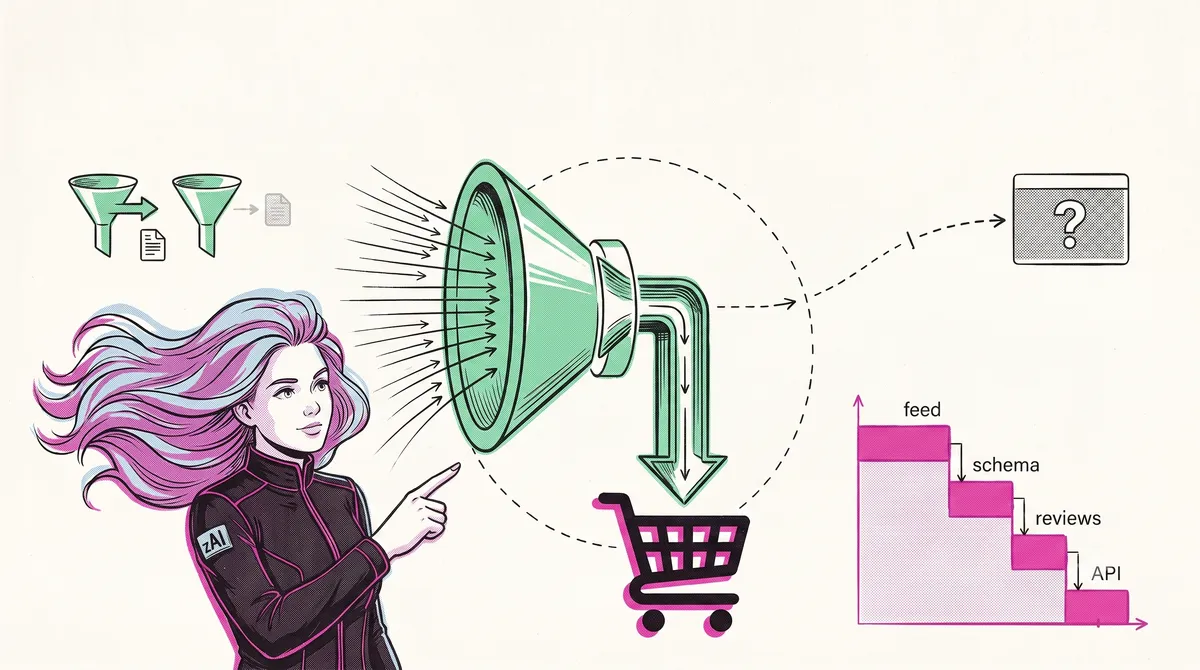
Search as a checkout: what Google's Connected Apps means for ecommerce in LATAM
With Connected Apps, Google lets people buy from the search bar without ever visiting your site. The conversion point, and the buyer's data, shifts to the agent: what to prepare in your stack before it reaches the region.
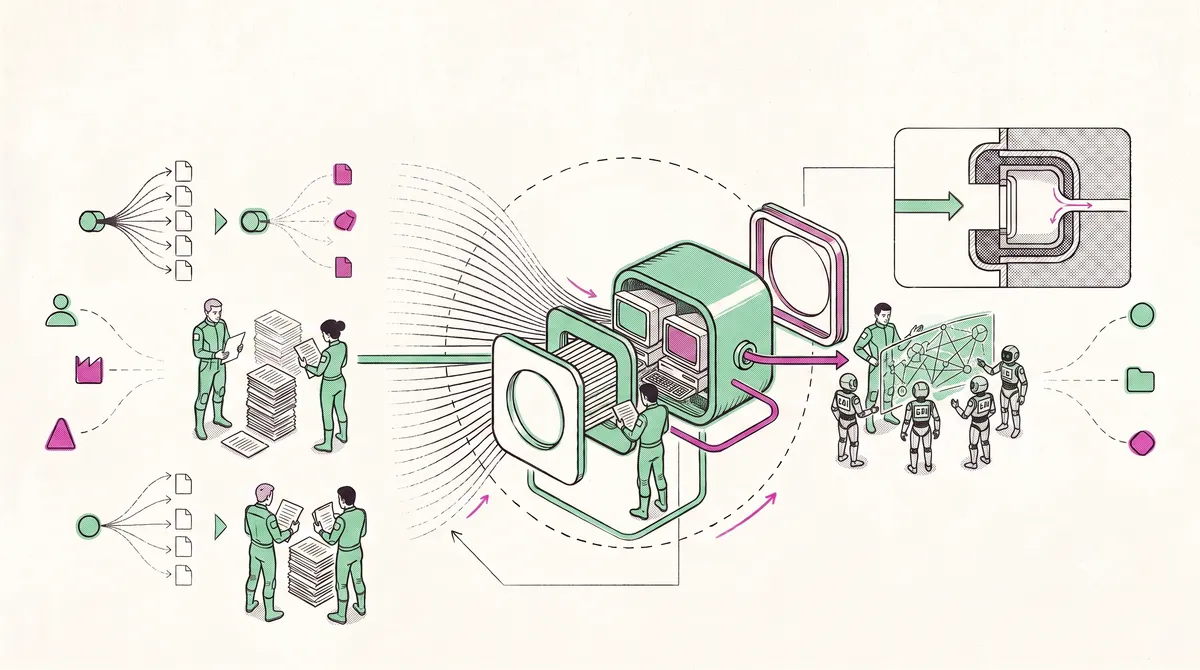
The Paid Media Agency that was, the one that should be, and the one that will survive
Paid media agencies built their business on manual execution that platforms have already automated. What remains is real strategy: connecting paid media with business objectives in contexts where data is ambiguous.

Retail Media Under Pressure: the independent shrinks and the buying decision moves to the assistant
Two moves in one month redraw retail media: Criteo falls into private equity and Amazon pays to be in ChatGPT while blocking its data from OpenAI. The underlying tension is who controls the rails and the purchase data.

The first hard number on AI search erosion: what the Bocconi study measures, and why the curve matters more than the percentage
A Bocconi study quantifies AI search erosion for the first time: ChatGPT cuts traditional searches 9.4% on average, 17% after 20 weeks. The curve matters more than the number.

How to measure ChatGPT ads when the only read was OpenAI's own
On July 7, 2026, Profound launched Ads Studio, the first platform that measures ad presence in ChatGPT, Perplexity and Gemini independently of what each platform reports, with two proprietary metrics: Paid Share of Voice and Relevance Score.

LinkedIn launched 5 AI creative tools in Campaign Manager: what changes for B2B teams in LATAM
On July 1, 2026, LinkedIn activated five AI tools inside Campaign Manager. The most important figure in the announcement is not the feature list but the benchmark that accompanies it: campaigns with 5 or more ad variants achieve more than 20% higher CTR than single-ad campaigns. For B2B teams in LATAM operating with limited creative resources, that number redefines what acceptable testing looks like.

GA4 changed how your traffic sources read: Source Group, the AI Assistant channel, and what to review this month
On June 11, 2026, GA4 added the Source Group dimension: it retroactively normalizes the fragmented source strings of about ten platforms (facebook, fb and m.facebook.com become a single row), with ChatGPT and Perplexity as first-class sources. Per-source rankings move without the market moving, and the change lands next to two others that should not be conflated: the May 13 AI Assistant channel (forward-only) and the June 15 consent restructure, the only one that can move real volumes. What gets simpler, what did not change, and what is worth reviewing in your properties this month.

Every ads platform now speaks MCP
Between February and June 2026, six ads platforms (Amazon, Google, Meta, TikTok, Pinterest and Microsoft) shipped official MCP servers: the ads account became operable by AI agents through official OAuth, with no sketchy connectors and no account-ban risk. But the platforms diverge on how much power the agent gets: Google chose read-only, Meta chose full write with everything paused by default, TikTok and Amazon chose full write without that documented brake. That divergence is the news: the governance decision does not come solved out of the box, it has to be made by every team spending real money.

Product, growth, and technology: the convergence your martech stack hasn't absorbed yet
Product, growth, and technology increasingly run as a single discipline, but most martech stacks are still wired in silos inherited from the previous era. Consolidating cuts friction, and raises vendor dependence by exactly the same amount: there is no free lunch. It matters most for startups and scaleups where speed of learning beats optimizing each layer on its own.
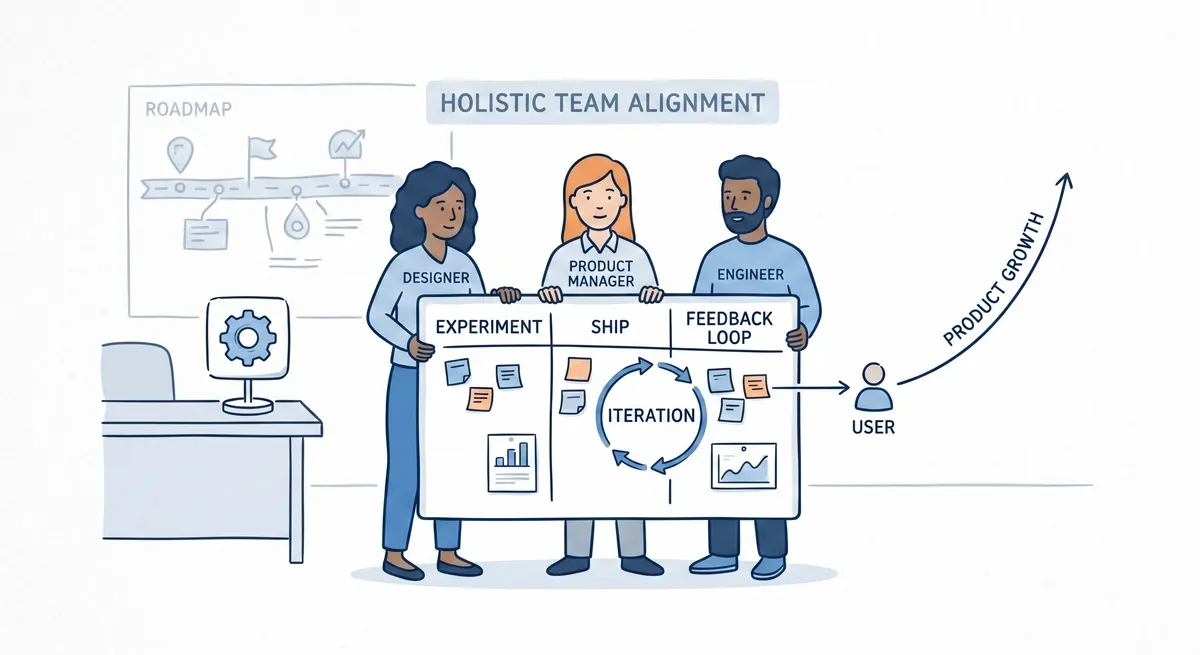
What Running a Growth Agency Taught Me About Product Teams
Most growth problems aren't acquisition problems: they're product-clarity problems that only show up once traffic increases. Lessons from running a growth agency on why the fastest teams argue about metrics before solutions, and the one question every product team should answer every week.

ChatGPT Ads: what early testers are reporting, and which countries are next
In four months, ChatGPT advertising went from a US-only test to five live countries, with Mexico and Brazil next in line. The performance data looks attractive, but almost all of it comes from OpenAI or its commercial partners, with no independent verification. For a team in LATAM, the move today is not to enter the channel: it is to get your own measurement ready before it lands.
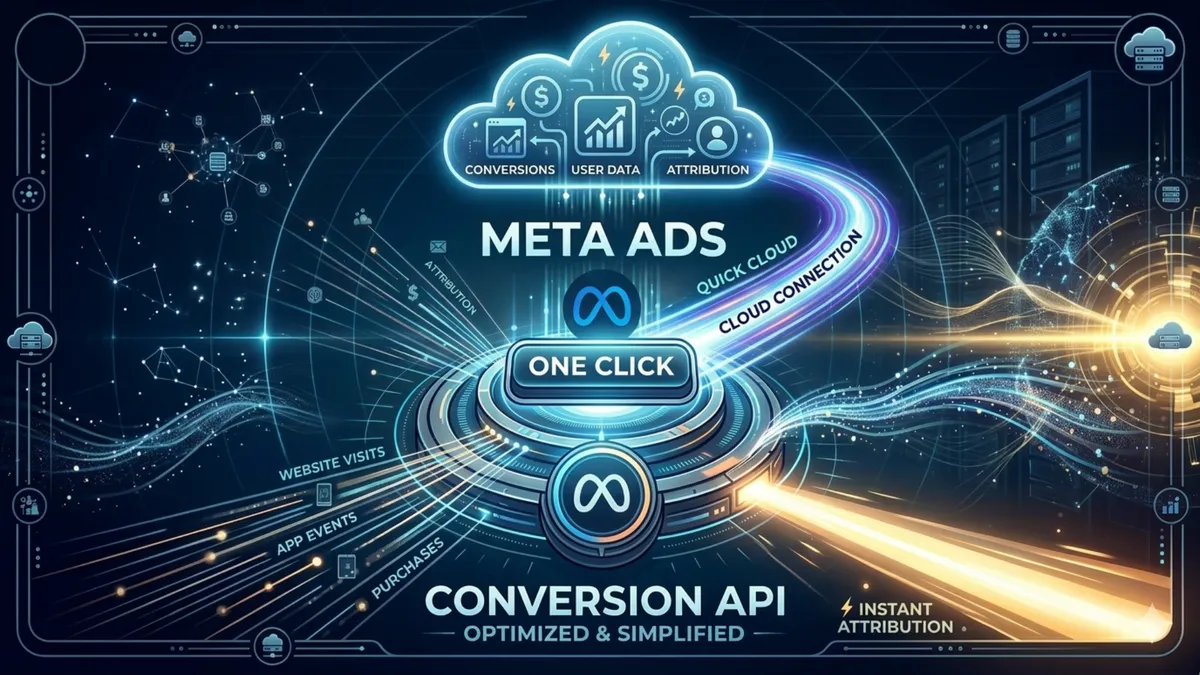
Meta Simplifies CAPI and the Pixel With One Click: More Signal for Everyone, But Mostly for Meta
Meta launched a one-click Conversions API setup and a Pixel that auto-enriches data with AI. Google did the same thing five days earlier. Both platforms are simplifying measurement at the same time because both need more signal to feed their optimization models in a post-iOS ecosystem that is running out of browser data. If you did not have CAPI, this is a no-brainer. If you already did, the question is what the AI enrichment changes and who controls the data.

X Ads Manager Got a Makeover: New Dashboard, AI Targeting, Vertical Video. But the Migration Broke Things.
X redesigned its Ads Manager with real improvements: AI targeting, vertical video, unified dashboard. The product is better. But the migration brought data discrepancies between API and dashboard, a policy overhaul with 35% rejection rates, an aesthetic scoring system that financially penalizes non-compliant creative, and a global outage during the rollout.
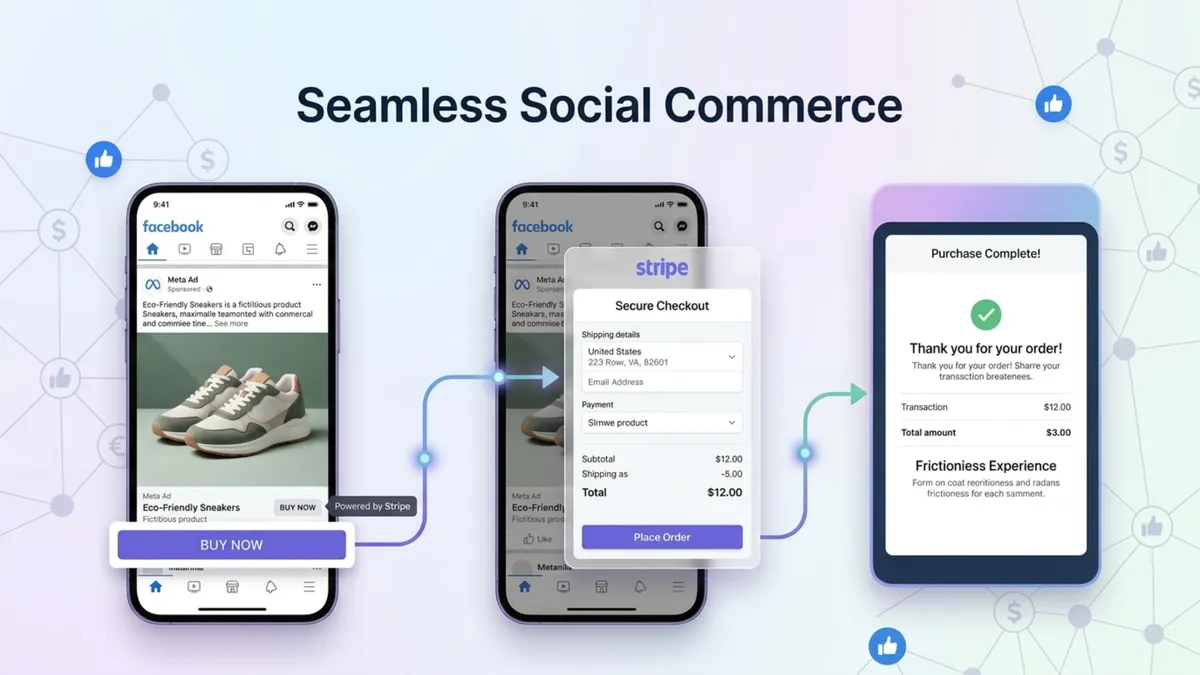
Stripe Enters Facebook Ads: Native Checkout, the Agentic Commerce Protocol
Stripe launched native checkout inside Facebook Ads where users can buy without leaving the app. This isn't just a payments feature: it's the first concrete step toward a model where the funnel compresses to ad-to-checkout. For paid media teams, the urgent question isn't whether to activate, but how to measure when the click to your site disappears.
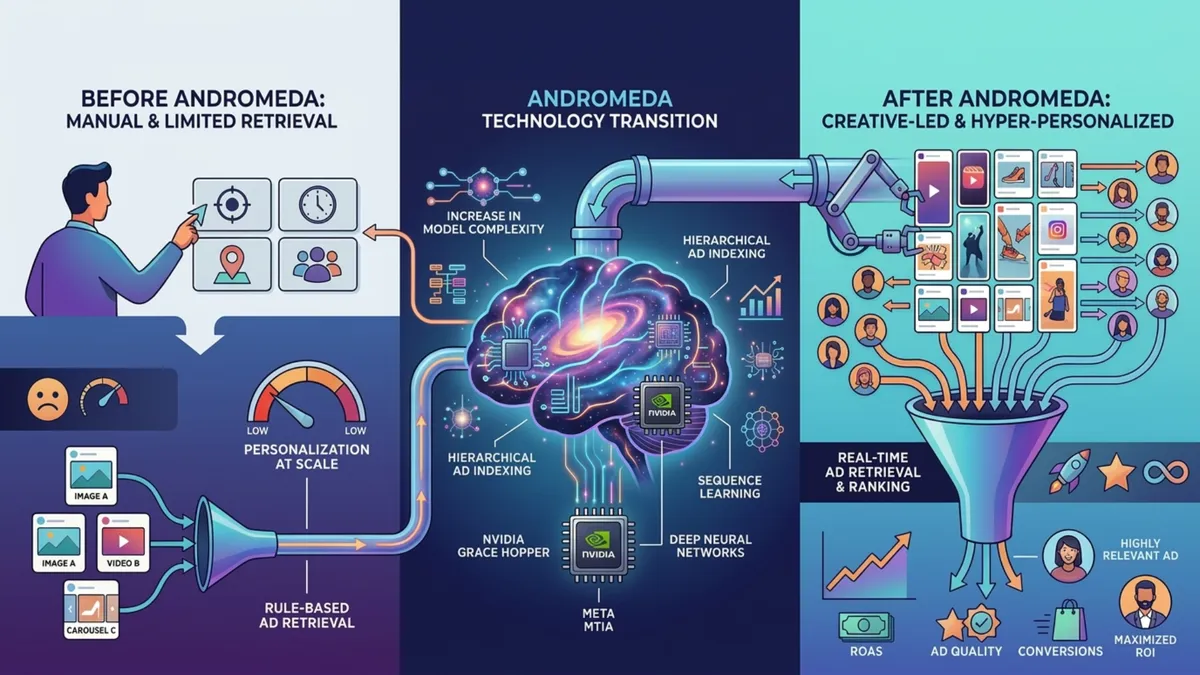
Meta Andromeda: real revolution in ad delivery or black box with better marketing?
Andromeda radically expanded how many ads compete for each impression on Meta, feeding Advantage+ with more data and more options. The operational response depends on team size, budget, and tolerance for concentration risk.

PostHog and the Future of Product Analytics
PostHog has consolidated into a single open-source product the capabilities that previously required four or five vendors, and the capital market has validated this with a $1.4 billion valuation. The model works especially well for technical teams in the startup and SMB segments, but the "total consolidation" thesis has real limits.

Google Meridian Model for MMM studies
Marketing mix modeling has evolved rapidly, driven by open-source tools that combine econometrics, machine learning, and accessibility. In this context, Meridian, developed by Google, stands out for its Bayesian modeling approach and transparent implementation. But it’s not alone: models like Robyn (from Meta), LightweightMMM by PyMC Labs, and other custom libraries are also part of this wave of analytic democratization. Each has pros and cons depending on use case, team maturity, and available resources—and often the choice simply comes down to technical stack compatibility or internal team preferences.

Infillion acquires Catalina: real purchase data now in Programmatic
Infillion acquired Catalina, the world's largest source of deterministic purchase data: 130 million households, 70 retail banners, $600 billion in annual spending tracked. The data will be exclusive to the Infillion platform. For the US programmatic ecosystem, this consolidates verified purchase data within a single DSP. For LATAM, where that infrastructure doesn't exist at comparable scale, the measurement gap widens while retail media investment grows at 28% annually.

Manus AI in Meta Ads Manager: the platform now also operates your account
Meta integrated Manus AI into Ads Manager as an autonomous agent available to all advertisers. Current capabilities are reporting and analysis, not campaign execution. But the conflict of interest is structural: the platform that sells your inventory now also controls the intelligence layer inside your account.
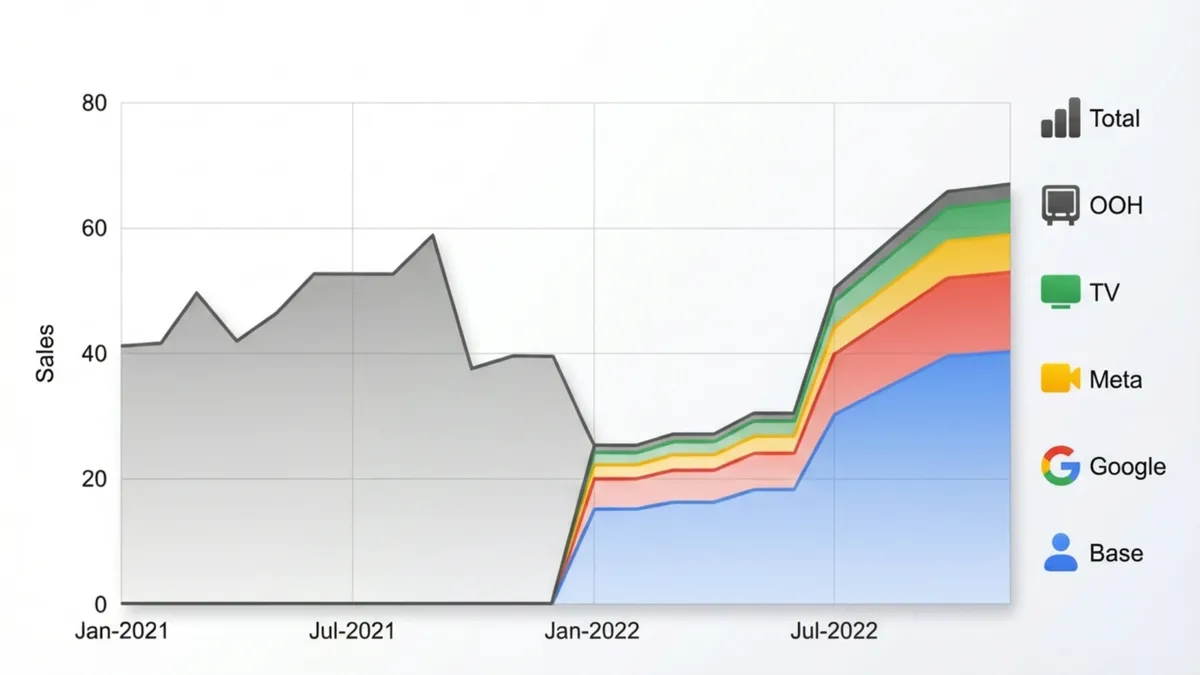
Omnichannel Studies make a comeback powered by Machine Learning
The proliferation of media channels and the increasing importance of data privacy are driving marketers to seek alternative strategies for measuring and optimizing their advertising efforts. In this new context, traditional Marketing Mix Models (MMMs) emerge as a viable alternative to address these challenges, aiding marketing professionals in making data-driven decisions with confidence.
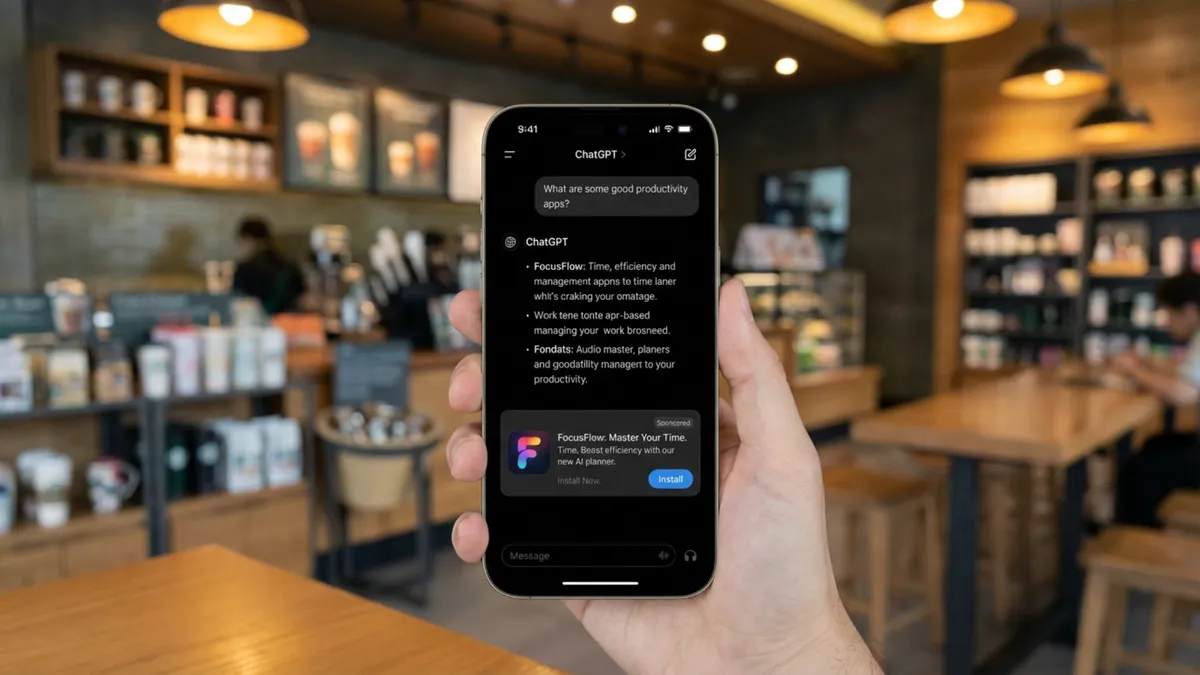
ChatGPT Ads Are Now in Testing: An Operational Update
OpenAI started testing ads in ChatGPT for free tier users in the US. Ads appear below responses without influencing content. There's no buying platform and no performance benchmarks. The honest move today: awareness, not resource investment.
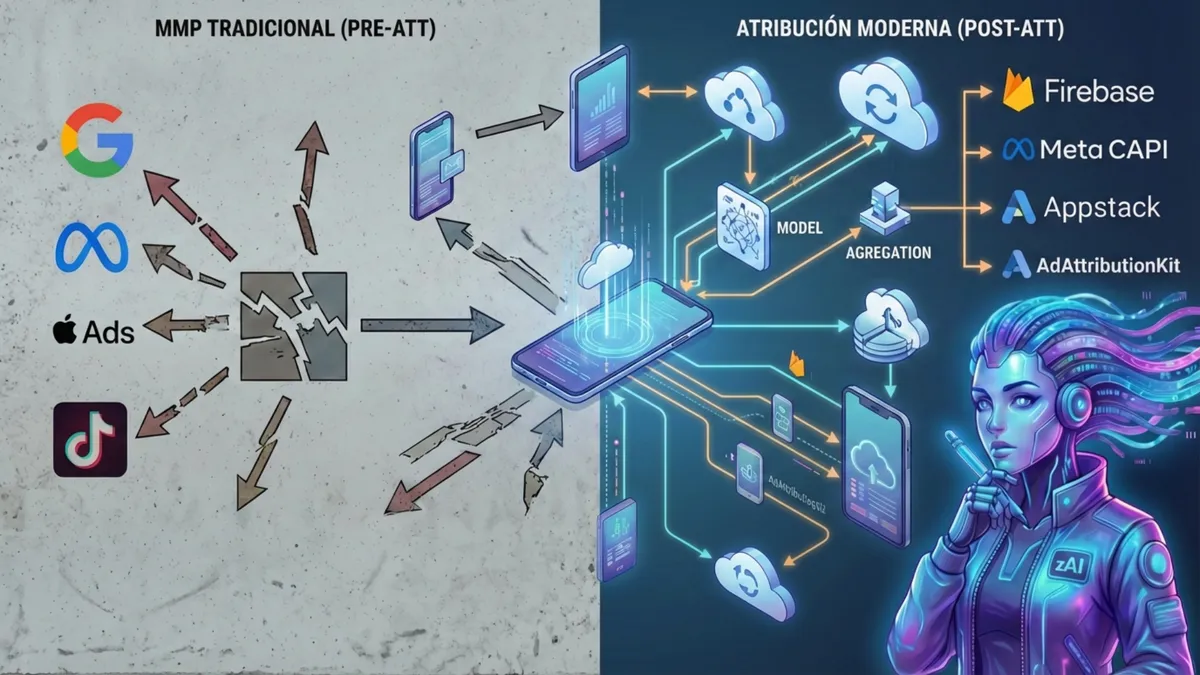
Mobile Attribution in 2026: Beyond the MMP
Before App Tracking Transparency (2021), Mobile Measurement Partners (MMPs) operated with deterministic precision. The IDFA allowed for a direct connection between an ad impression, an install, and an in-app event, making MMPs the "single source of truth". Post-ATT, with IDFA opt-in rates hovering between 15-30%, that model collapsed. MMPs migrated to probabilistic attribution using IP addresses, timestamps, and device characteristics to make "educated guesses". Meanwhile, SKAN (SKAdNetwork) offers deterministic but aggregated data, often with 24-48 hour delays that hinder daily optimization. The result: The "Big Five" dominant MMPs (AppsFlyer, Adjust, Branch, Kochava, Singular) now primarily display what ad networks send them. Real attribution is now performed by Meta, TikTok, and Google using their own proprietary models.

ChatGPT Ads: The Rise of Answer Engine Marketing (AEM)
The launch of ads in ChatGPT marks the transition from Search Engine Marketing (SEM) to Answer Engine Marketing (AEM). This shift will impact performance measurement, especially in Latin America, where deployment is expected by late 2026. Success will depend on brands' ability to become the suggested answer, prioritizing semantic influence over traditional click bidding.
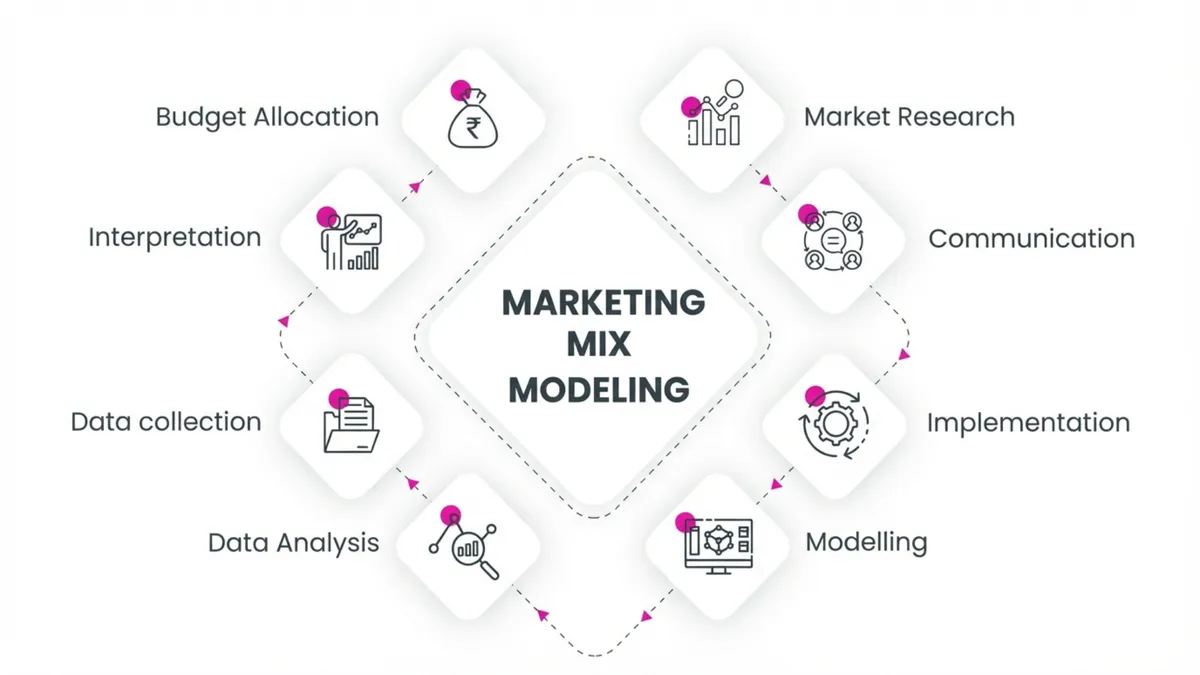
Are Marketing Mix Model Guidelines Applicable to my Team?
Marketing Mix Models are powerful tools that provide valuable insights into the effectiveness of marketing activities. While high-level MMMs offer a broad overview, adapting these studies to address specific segments, markets, or tactics can yield more actionable insights. By conducting segmented analysis, collecting granular data, and performing deep dives, brands can optimize their marketing efforts to meet the diverse demands of their consumers. It’s a tool that will help marketers and C-Level executives to understand the DNA of their marketing efforts and be more effective in how they develop future strategies, while looking to improve their team development and knowledge.
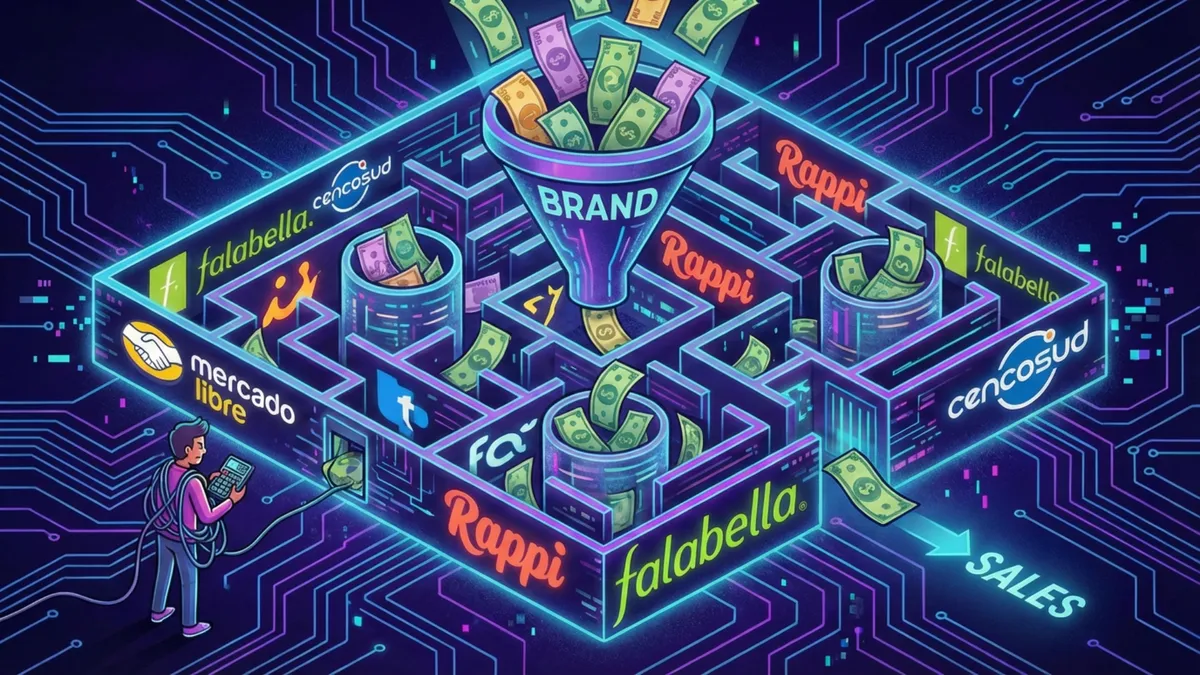
The click tax: The trap of Retail Media fragmentation in LATAM
If you are a mass consumption brand in Latin America, you are not buying advertising; you are paying a "data toll" to each retailer separately. Retail Media is the great promise of the decade, but the lack of standards is creating a black hole in marketing budgets. This post analyzes why your reports from Mercado Ads and Rappi are never going to match and how to avoid being charged three times for the same sale.