LinkedIn launched 5 AI creative tools in Campaign Manager: what changes for B2B teams in LATAM
LinkedIn published the official announcement on July 1, rolling out five new AI tools integrated directly into Campaign Manager. Unlike third-party integrations or external workflows, all five operate inside the platform and activate at the campaign setup stage.
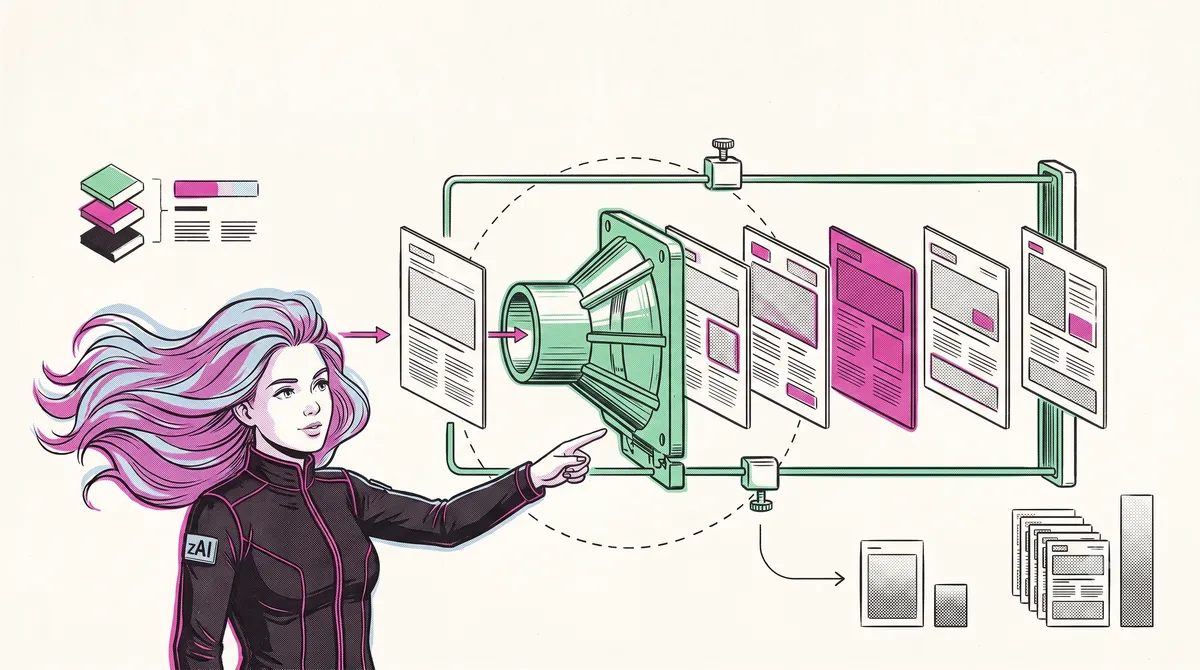
The five tools are as follows. Brand Kit lets teams upload a color palette, typography, and tone-of-voice guidelines so the AI generates creatives within those parameters. Draft with AI takes a site URL and campaign objective and produces a first ad draft ready for editing. AI Ad Variants generates multiple versions of the same ad, designed for testing. Ads Personalization adapts creatives to specific audience segments. And Flexible Ad Creation expands the formats available for that automated generation.
The platform benchmark accompanying the launch is specific: campaigns with 5 or more ad variants outperform single-ad campaigns by more than 20% in CTR. LinkedIn cites this as its own data, not an independent study. That does not invalidate it, but it does define how to use it: as an internal business argument, not as a cross-platform comparison figure.
The problem they solve
Creative testing in B2B LinkedIn campaigns has a classic obstacle: producing variants costs time and money. A small team without an in-house designer reaches launch with one or two ads, runs them without real rotation, and never hits the threshold where the algorithm has enough data to optimize. The result is mediocre CTR that gets attributed to "LinkedIn is expensive" when the actual failure is in testing.
Draft with AI and AI Ad Variants target exactly that bottleneck: they generate starting material from assets the team already has, such as the site, the objective, and the defined audiences, reducing production time from zero to review-and-adjust time. Brand Kit adds a control layer that matters: teams can generate variants without losing brand coherence, which is the most common objection when AI creative tools are introduced into accounts with strict brand guidelines.
What changes in the workflow
Before these tools, the standard flow was: creative brief, external or internal production, review, upload to Campaign Manager, individual variant setup. With Draft with AI and AI Ad Variants, the flow collapses to: URL plus objective, review of the generated draft, tone calibration with Brand Kit, launch. Time that previously went to production now goes to review and calibration.
That has two concrete effects. The first is speed: reaching 5 variants in an afternoon instead of a week. The second is testing quality: with more variants active from the start, the system has more signal to optimize on, and the team can analyze which angle performs best instead of betting on just one.
The real operational limit is human review. Generating 10 variants with AI in 20 minutes only pays off if someone with judgment reviews which of those 10 have brand coherence, the right message for the segment, and a real offer. AI generates volume; editorial judgment is not automated.
The tensions worth watching
The 20% benchmark comes from LinkedIn itself, which has a direct incentive for its tools to be perceived as effective. There is no independent data to contrast it yet. It works as a directional signal, not as a performance guarantee.
The rollout of these tools may not be simultaneous across all markets or accounts. The practical move is to verify availability in Campaign Manager before planning a testing sprint around these features.
There is also a brand governance tension that the tools do not resolve on their own: Brand Kit can store the parameters, but if the brand parameters are not well defined at a strategic level, the AI will generate variants within an imprecise frame. The input determines the output.
And ad personalization, while included in the pack, still depends on the quality of audience segmentation. Ads Personalization assumes teams already have audiences defined with solid data; if targeting is weak, the personalized ad is just a poorly directed ad with better production.
Who this is for (and who it is not)
For a B2B team in LATAM with active LinkedIn Ads and one paid media specialist managing the account, these tools lower the entry threshold to real testing: going from 1-2 variants to 5+ without requiring an additional creative team is operationally viable. The value is clearest when the bottleneck is production, not strategy.
For a scaled operation with a dedicated creative team, the value is different: it does not replace the process, but it can accelerate iteration generation on an already defined brief. The risk in those contexts is assuming that AI-generated variants are always suitable without quality review.
For accounts with very strict brand guidelines or regulated industries such as finance, health, or legal, Brand Kit helps but does not suffice: human review of each piece remains non-negotiable.
And for teams still defining their LinkedIn segmentation strategy, the logical order remains: audiences and objectives first, creative production second. AI creative tools amplify what is already well structured; they do not compensate for a strategy without foundation.
What we do not know
There is no published rollout timeline by region, so availability in accounts in Argentina, Mexico, Colombia, or Chile is not guaranteed from July 1. There is also no third-party data replicating LinkedIn's CTR benchmark. And the behavior of Ads Personalization at scale, with more granular audiences, does not yet have sufficient public documentation.
The real impact on conversion rates, not just on CTR, is an open question the market will answer over the coming months.
What to review in your account this month
What is worth doing before waiting for more data is short: verify whether Brand Kit is already available in your Campaign Manager, formalize brand parameters if they are not documented, and plan the next campaign launch with the goal of reaching 5 variants from day one. Not as an AI experiment, but as a testing practice that LinkedIn's benchmark identifies as the real optimization threshold. For more context on where automation in paid media is heading, our note on how every ads platform now speaks MCP points in the same direction.
Sources
This content was developed with AI assistance and reviewed by the Zenda team. The bad ideas are 100% ours.