ChatGPT Ads Opens Self-Serve Across Latin America: What US Advertisers Running the Region Can and Can't Plan Yet
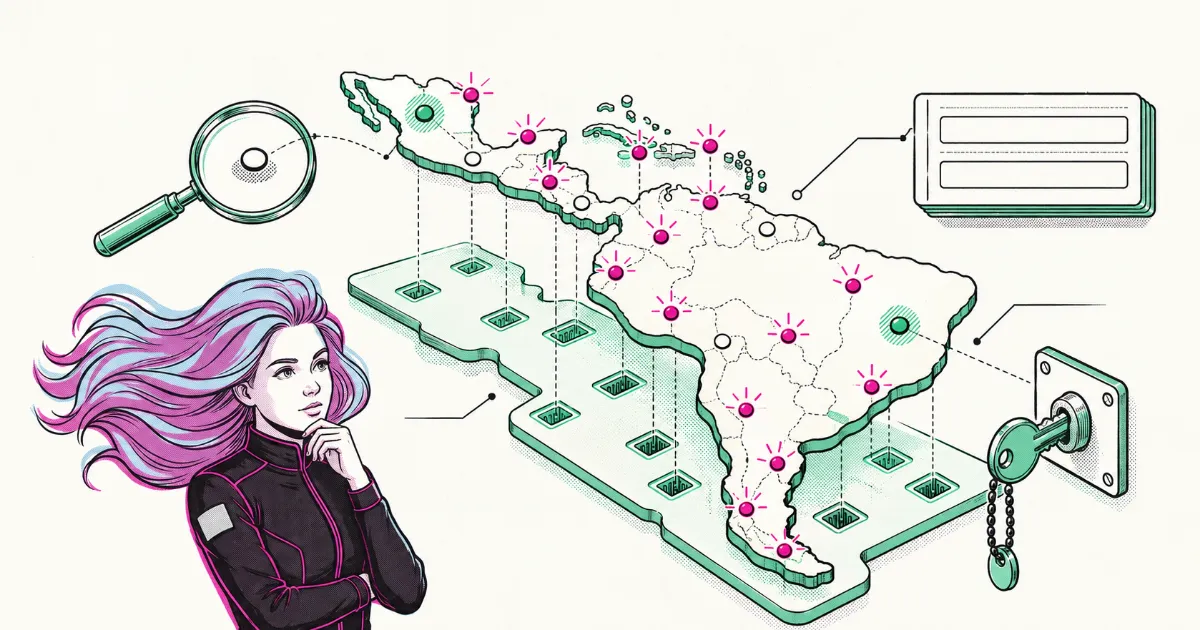
On October 21, 2026, OpenAI announced that ChatGPT Ads is adding 26 countries, for 89 in total, and that 14 of the new ones are in Latin America: the post names Argentina, Chile, Colombia and Peru. The availability list we counted on September 3, 2026 had 52 countries, and from Latin America it listed just Brazil and Mexico. If you run paid media for a US brand that sells into the region, or that bills through subsidiaries there, the question is no longer when ChatGPT Ads reaches Buenos Aires, Santiago or Bogotá. It is which entity opens the account, what you need in place before the first dollar, and which answers OpenAI hasn't published yet, starting with billing currency and local taxes.
Twenty-six new countries, fourteen in Latin America
The announcement adds 26 countries, and the line that matters for the region in OpenAI's post "ChatGPT Ads expands to 26 new countries" is this one: "Following our launches in Mexico and Brazil, we're bringing ChatGPT Ads to 14 more Latin American countries, including Argentina, Chile, Colombia, and Peru". Outside the region, the post names Nigeria, South Africa, Serbia, Ukraine, Cambodia, Bangladesh and Pakistan. On access, it says advertisers in these countries can come in "through technology partners or self-service access through Ads Manager".
The post adds two more data points. Per OpenAI, over 100,000 advertisers have run campaigns on ChatGPT in the just over eight months since ads launched, a global figure with no country breakdown. And ads appear only on the Free and Go plans; Plus, Pro and Enterprise stay ad-free, which matters if your audience skews toward paid subscribers.
The rule is about who gets billed
The condition OpenAI documents for self-serve is about the advertiser's legal entity. The Ads Manager availability table in OpenAI's help center puts it this way: "To use self-service Ads Manager, the legal entity that will advertise and be billed must be based in a country listed as available below". The United States is on that list, so for a US parent company the expansion doesn't change whether it can open a self-serve account.
What changes is the local side. With the list we counted on September 3, 2026, 52 countries with just Brazil and Mexico from Latin America, a company whose legal entity was only in Argentina, Chile or Colombia could not use self-serve. We covered that cut in our piece on self-serve access. As of September 30, 2026 the region was still Brazil and Mexico, with no date for the other three. Per the table as of October 21, 2026, the entity that advertises and gets billed can be in any of the 16 Latin American countries listed, which on that reading lets a subsidiary in Bogotá or Santiago use self-serve under its own name. Larger advertisers also have a separate route: the help center points them to OpenAI's Ads team for sales support.
Each document speaks to a different layer, and they shouldn't be blended. The help center documents account and billing. The post says OpenAI is "bringing ChatGPT Ads to" these countries, without detailing how or at what pace ads are served to users there. Neither document says whether an account billed to a US entity can target users in Argentina or Chile, and that is the first thing to confirm if you plan to run the region from a US account.
Brazil has its own earlier history. According to Brazilian press coverage of an OpenAI briefing, ChatGPT started serving ads to users in Brazil on August 4, 2026 (Free and Go, 18+), in an initial phase with agencies and no self-serve yet. That's press coverage of a briefing, not a company document, so treat it as unverified; the detail is in our piece on ChatGPT Ads arriving in Brazil and Mexico.
Sixteen countries in the table, fourteen in the post
The post says 14 and names four, while the help center table lists 16 Latin American countries as "Available", Brazil and Mexico included. They are Argentina, Bolivia, Brazil, Chile, Colombia, Costa Rica, the Dominican Republic, Ecuador, El Salvador, Guatemala, Mexico, Panama, Paraguay, Peru, Puerto Rico and Uruguay. Take out Brazil and Mexico, which were already there, and 14 remain, matching the post's number. That count is ours, made by putting the two documents side by side: OpenAI hasn't published the 14 as a list. The full table has 89 countries, the same total the post gives.
Honduras, Nicaragua and Venezuela are not in the table. That isn't a declared exclusion: per the help center, if a country isn't listed, self-serve isn't available there yet, though you can still sign up at ads.openai.com and OpenAI will notify you when it is.
What neither document says
The questions your finance or procurement team will ask before approving a regional budget aren't answered in the post, the table or the ChatGPT Ads billing article. We list them as undisclosed, without guessing:
- Which currency each country in the region is billed in. The billing article says billing country, currency and legal entity are tied to account setup and that payment thresholds vary by currency, but it doesn't list currencies by country.
- How local taxes are handled. The same article says applicable taxes can be added to the charge and that tax ID types depend on the billing country, but the case it spells out is Japan.
- Which technology partners operate in the region: the post mentions access "through technology partners" but names none.
- Minimum spend and contract terms.
- Whether targeting, formats and measurement (shopping, catalog, the HubSpot and Shopify integrations, Event Quality Score) work in each country the way they do in the US.
- Inventory volume by country.
On what comes next, OpenAI says something, with no date: its next phase will include "additional formats, objectives, buying options, and measurement capabilities". It doesn't say in what order those reach each country. Neither document has performance or cost data for the region, which limits any forecast you'd want to build before spending.
What to have in place before the first dollar
We recommend sequencing the launch around what you control, not around what OpenAI hasn't published yet.
Start with which entity gets billed. If the brand has a US parent and subsidiaries in the region, the table as of October 21, 2026 lets either the US entity or a subsidiary in a listed country be the billed advertiser, but it doesn't say whether a US account can reach users in the region, so it's worth settling the choice with finance before anyone creates an account. The billing article adds that billing country, currency and legal entity are tied to account setup and may not be self-serve editable afterwards, that the payment method should match the entity's country, and that billing under a different country or entity may require a separate advertiser account. Bring the undisclosed list (currency, taxes, minimums, terms, and cross-border targeting from a US account) to OpenAI and get answers before loading budget, not on the first invoice.
Then set up measurement before spending. In its September 16, 2026 product email, OpenAI described conversion optimization billed per impression, attribution windows of 7/14/30 for click and 0/1 for view, and an Event Quality Score from 1 to 10 for Pixel and CAPI. Whether all of that is available in each Latin American country is one of the undisclosed items, so a US setup can't be assumed to carry over: install the Pixel and the Conversions API, check which options the regional account actually shows, and choose windows deliberately. Setup is covered in our piece on conversion optimization, which OpenAI calls its recommended model, and reading results outside the platform in how to measure ChatGPT ads.
Don't plan against the Brazil and Mexico CTR either. The Graphite and Similarweb report of September 28, 2026 shows all-time CTR of 1.91% for Brazil, 1.55% for Mexico and 0.73% for the US, but over different windows: the US counts from March 30 and Brazil started in August. We broke that down in our piece on ChatGPT Ads CTR by market. A regional test needs its own baseline from week one, and your US numbers aren't that baseline either.
Finally, start with a small, bounded test measured on your own conversions. The sources don't support a recommended amount, since they publish no minimums or costs for the region, so the size comes from each account's volume. What's worth doing is setting the stop-or-continue criterion before launch: which conversion has to register, within how many weeks, and at what maximum cost compared with the account's other channels in the same country. That makes the hypothesis concrete: whether the measurement you need is available in that country, whether it records your conversions, and at what cost.
What could make this piece outdated
This piece states availability by market, so it's subject to re-checking: if OpenAI publishes the list of the 14 countries, per-country billing currency, the region's technology partners or per-country detail on formats and measurement, what's listed here as undisclosed may change. Moving early makes sense for teams with an entity in a listed country and their own measurement already in place, who can learn from a bounded test while OpenAI fills in the gaps. For an organization that needs currency, taxes and a contract defined before issuing a purchase order, the useful step is asking OpenAI for those answers first, and if the billing entity sits in a country that isn't in the table, self-serve isn't an option yet.
This content was developed with AI assistance and reviewed by the Zenda team. Any bad ideas are entirely our own.