Paid Media & MarTech through the lens of Zenda
Clear analysis on what shifts in the growth ecosystem: platforms, data, martech and judgment.

On August 24 YouTube starts counting a view from the first frame, and the view numbers in your reports jump that day with no marker
Starting August 24, 2026, YouTube counts a public view from the first frame, with no minimum watch time, across long-form video, Shorts, livestreams and podcasts. The old metric survives under another name and monetization does not change, but the number your clients read jumps that day with no marker in the report.

Google rewrites Merchant Center performance reports on August 24, and restates July's numbers behind them
On August 11 Google announced that Merchant Center performance reports change on the 24th. Two of the four changes apply retroactively back to July 1, so a July number already reported will stop matching the platform. The only defence is exporting the history before that date.

Cloudflare launched its AI visibility dashboard, and its four metrics do not come from the network layer that makes it different
Cloudflare added the AEO Visibility Dashboard to its AEO Suite on August 6, in early access with no public pricing. Its four metrics are built from the same prompt sampling the release itself describes as limited, while the genuine network-layer data lives in a separate panel, AI Operator Activity.

Nielsen is buying DoubleVerify for $2.15 billion, and ad verification lands in the hands of a company that competes in the business it audits
On August 6, Nielsen announced it will buy DoubleVerify for $2.15 billion, eight months after Integral Ad Science was taken private by a private equity fund. In the same window, the owner of IBOPE, Latin America’s TV ratings currency, also changed hands. What that changes for anyone buying media behind a verification gate, and which questions are now worth asking.

The IAB's new AI visibility framework sets a measurement standard no one yet audits
The IAB's new framework is the first attempt to standardize how AI visibility gets measured, with a nine-criteria bar for decision-grade data. It doesn't certify anyone yet, so the burden of proof for vendor claims falls on the buyer.

How PostHog turns every release into a measurable question, and why almost no one in growth does the same
Feature flags and experiments aren't a technical detail of PostHog: they're the mechanism that answers "did this work?" before anyone, human or agent, can propose the next change.

How to measure ChatGPT ads when the only read was OpenAI's own
On July 7, 2026, Profound launched Ads Studio, the first platform that measures ad presence in ChatGPT, Perplexity and Gemini independently of what each platform reports, with two proprietary metrics: Paid Share of Voice and Relevance Score.

GA4 changed how your traffic sources read: Source Group, the AI Assistant channel, and what to review this month
On June 11, 2026, GA4 added the Source Group dimension: it retroactively normalizes the fragmented source strings of about ten platforms (facebook, fb and m.facebook.com become a single row), with ChatGPT and Perplexity as first-class sources. Per-source rankings move without the market moving, and the change lands next to two others that should not be conflated: the May 13 AI Assistant channel (forward-only) and the June 15 consent restructure, the only one that can move real volumes. What gets simpler, what did not change, and what is worth reviewing in your properties this month.
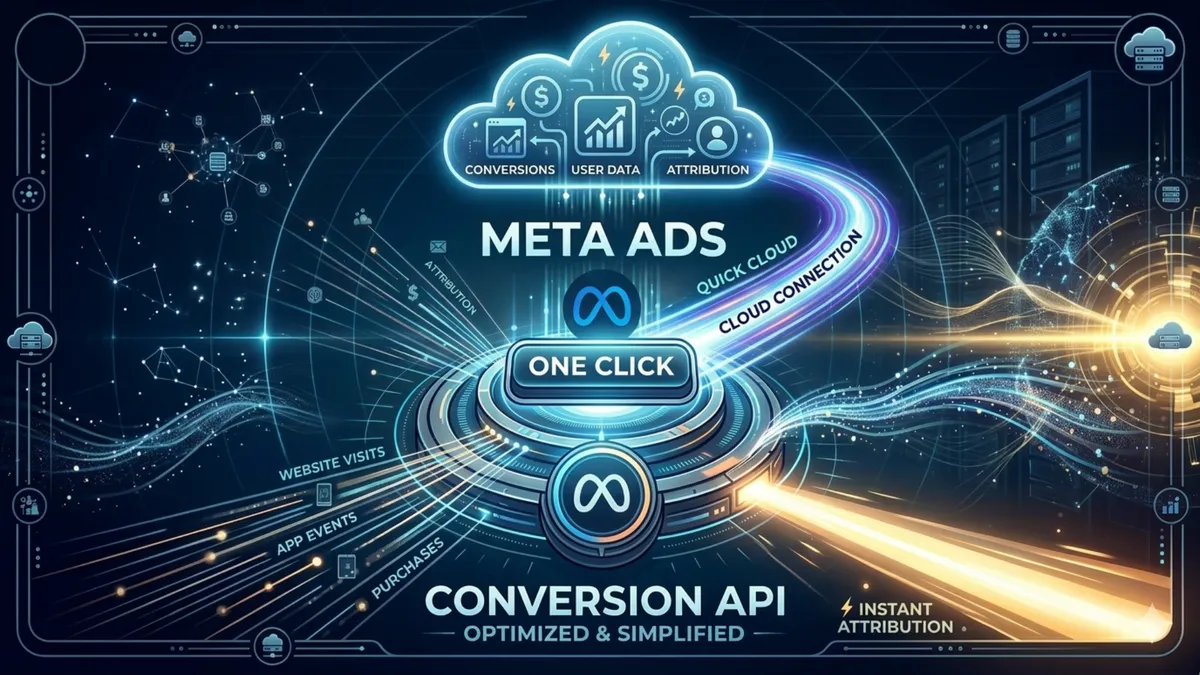
Meta Simplifies CAPI and the Pixel With One Click: More Signal for Everyone, But Mostly for Meta
Meta launched a one-click Conversions API setup and a Pixel that auto-enriches data with AI. Google did the same thing five days earlier. Both platforms are simplifying measurement at the same time because both need more signal to feed their optimization models in a post-iOS ecosystem that is running out of browser data. If you did not have CAPI, this is a no-brainer. If you already did, the question is what the AI enrichment changes and who controls the data.

PostHog and the Future of Product Analytics
PostHog has consolidated into a single open-source product the capabilities that previously required four or five vendors, and the capital market has validated this with a $1.4 billion valuation. The model works especially well for technical teams in the startup and SMB segments, but the "total consolidation" thesis has real limits.

Google Meridian Model for MMM studies
Marketing mix modeling has evolved rapidly, driven by open-source tools that combine econometrics, machine learning, and accessibility. In this context, Meridian, developed by Google, stands out for its Bayesian modeling approach and transparent implementation. But it’s not alone: models like Robyn (from Meta), LightweightMMM by PyMC Labs, and other custom libraries are also part of this wave of analytic democratization. Each has pros and cons depending on use case, team maturity, and available resources—and often the choice simply comes down to technical stack compatibility or internal team preferences.
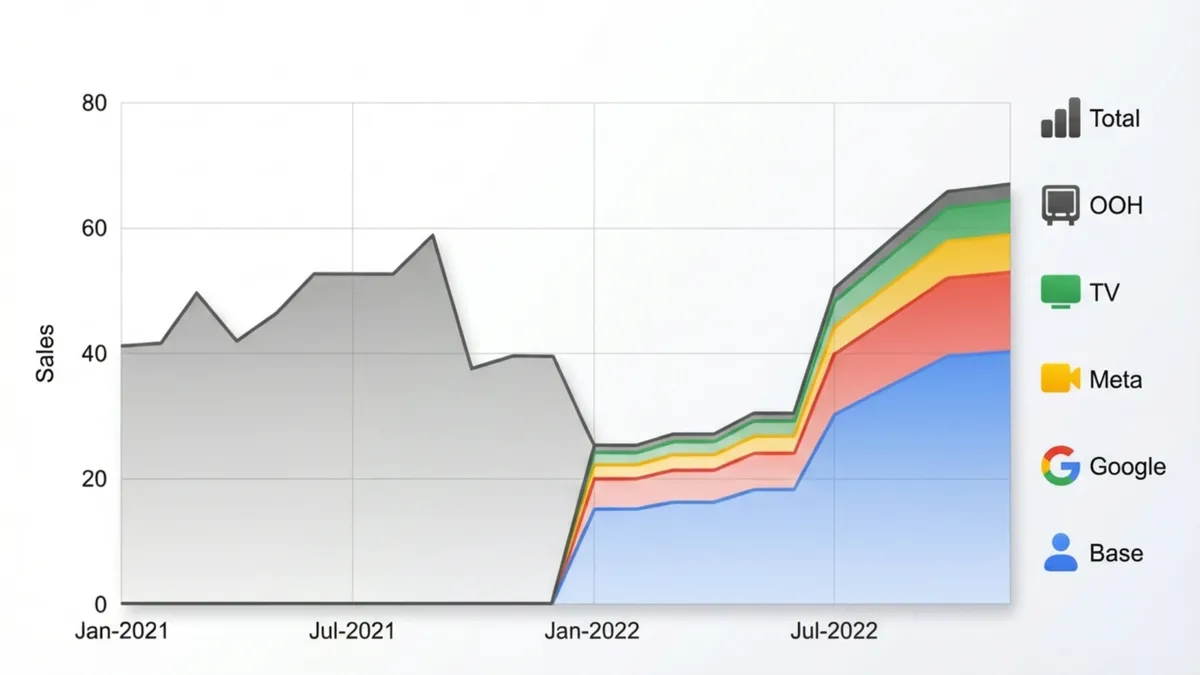
Omnichannel Studies make a comeback powered by Machine Learning
The proliferation of media channels and the increasing importance of data privacy are driving marketers to seek alternative strategies for measuring and optimizing their advertising efforts. In this new context, traditional Marketing Mix Models (MMMs) emerge as a viable alternative to address these challenges, aiding marketing professionals in making data-driven decisions with confidence.
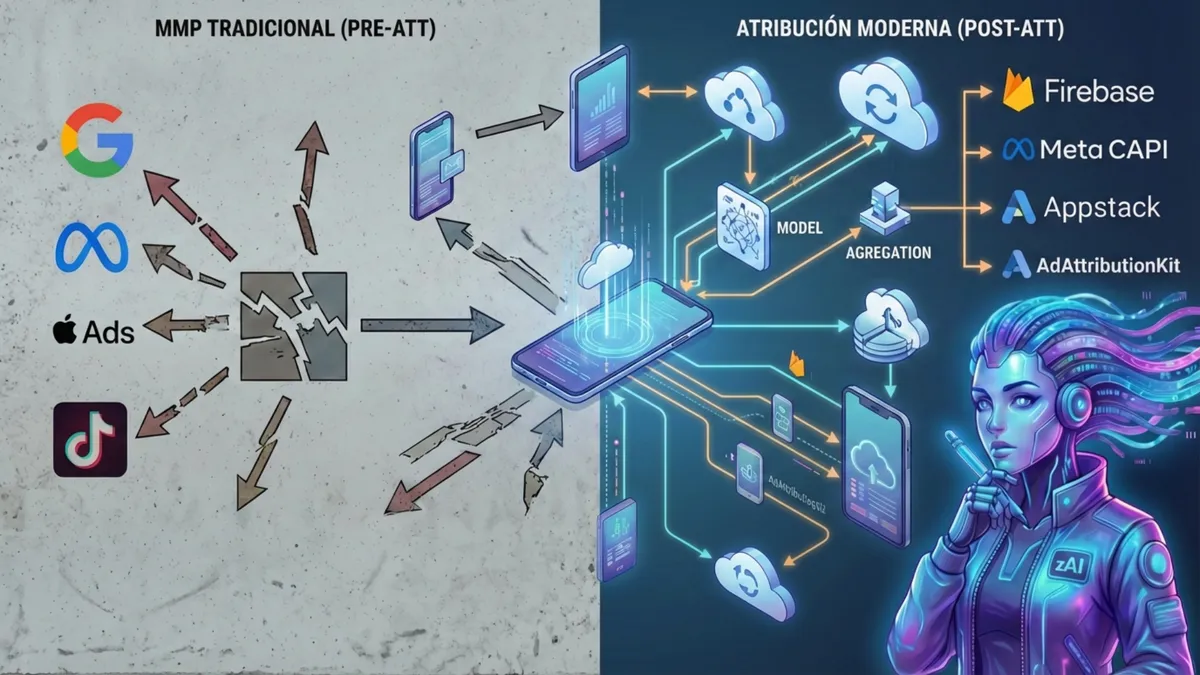
Mobile Attribution in 2026: Beyond the MMP
Before App Tracking Transparency (2021), Mobile Measurement Partners (MMPs) operated with deterministic precision. The IDFA allowed for a direct connection between an ad impression, an install, and an in-app event, making MMPs the "single source of truth". Post-ATT, with IDFA opt-in rates hovering between 15-30%, that model collapsed. MMPs migrated to probabilistic attribution using IP addresses, timestamps, and device characteristics to make "educated guesses". Meanwhile, SKAN (SKAdNetwork) offers deterministic but aggregated data, often with 24-48 hour delays that hinder daily optimization. The result: The "Big Five" dominant MMPs (AppsFlyer, Adjust, Branch, Kochava, Singular) now primarily display what ad networks send them. Real attribution is now performed by Meta, TikTok, and Google using their own proprietary models.
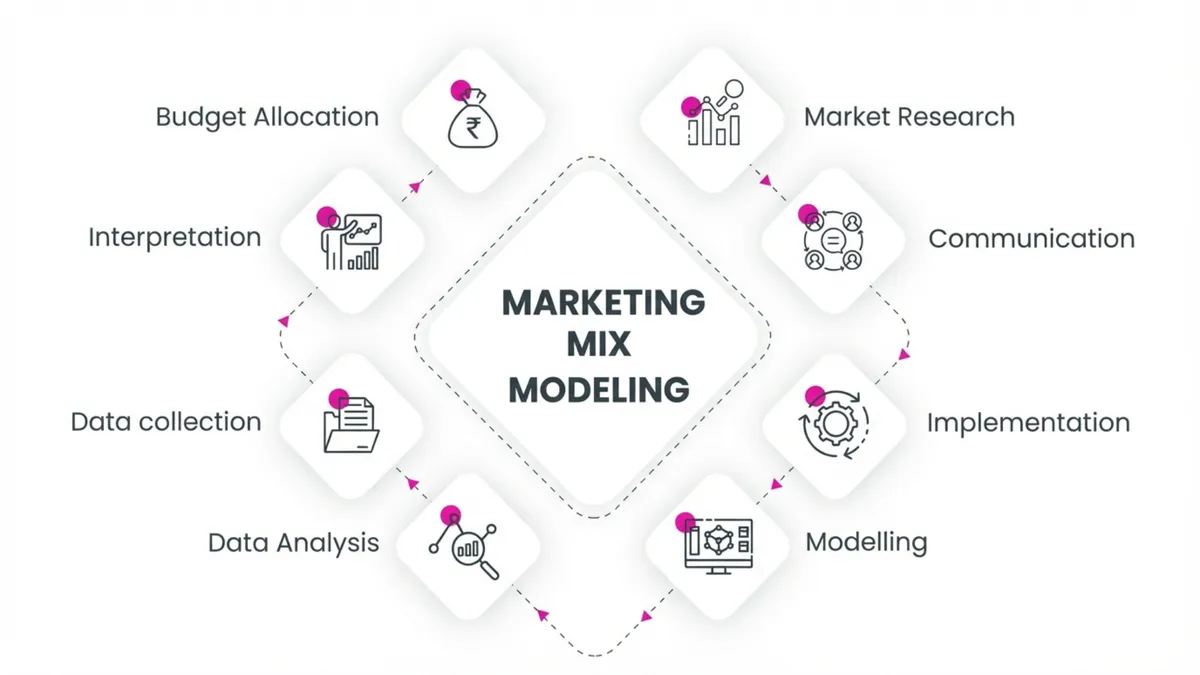
Are Marketing Mix Model Guidelines Applicable to my Team?
Marketing Mix Models are powerful tools that provide valuable insights into the effectiveness of marketing activities. While high-level MMMs offer a broad overview, adapting these studies to address specific segments, markets, or tactics can yield more actionable insights. By conducting segmented analysis, collecting granular data, and performing deep dives, brands can optimize their marketing efforts to meet the diverse demands of their consumers. It’s a tool that will help marketers and C-Level executives to understand the DNA of their marketing efforts and be more effective in how they develop future strategies, while looking to improve their team development and knowledge.